
Marc Legros
CEMES-CNRS, Toulouse (France)
Quantifying grain boundary mechanisms as an alternative to dislocation-based plasticity
 Marc Legros is a CNRS Research Director at CEMES-CNRS, Université de Toulouse, France. His research focuses on the mechanical behavior of materials, particularly crystal defects, plasticity, dislocations, grain boundaries, and deformation mechanisms at small length scales. Legros is known for his advanced in situ transmission electron microscopy studies of plasticity and grain-boundary-mediated deformation in nanostructured materials. He has co-authored numerous journal articles and contributed to European research networks in nanoscale mechanics. He received the CNRS Silver Medal in 2018 and the Grand Medal of SF2M in 2025.
Yuri Mishin
George Mason University, Virginia (USA)
Thermodynamics and kinetics of grain boundary stabilization
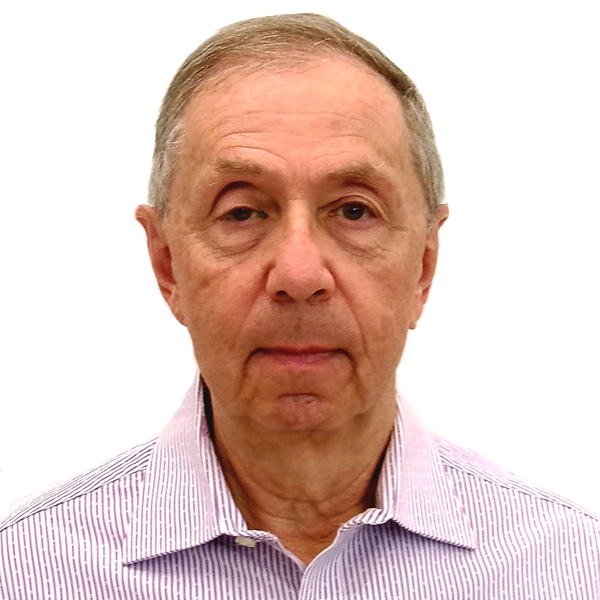 Yuri Mishin is a Professor of Physics in the Physics and Astronomy Department at George Mason University in Virginia (USA). His research focuses on theory and computer modeling of the physical properties of structural and functional materials, particularly interfaces, thermodynamics, and statistical mechanics of alloys, phase transformations, diffusion processes, and mechanical behavior. Mishin co-authored one book, several book chapters, and many journal articles on materials physics. He is a Fellow of the American Physical Society and a recipient of the Alexander-von-Humboldt Prize.
Marco Salvalaglio
Technical University of Dresden (Germany)
From disconnection flow to grain growth through scale-bridging interface modeling
 Marco Salvalaglio earned his Ph.D. in materials science from the University of Milano-Bicocca in 2016. He has been a postdoc at TU Dresden, initially supported by a two-year Alexander von Humboldt Postdoctoral Fellowship (2016), and a guest scientist at the Leibniz Institute IHP-Microelectronics. In 2019, he was also a Visiting Junior Fellow at the Hong Kong Institute of Advanced Studies (CityU Hong Kong). He established his Mesoscale Material Modeling and Simulation group at TU Dresden in 2021 through a DFG Emmy Noether grant, and he was appointed apl. Professor of Computational Materials Science in 2024. His research is highly interdisciplinary and aims to understand and tailor material properties across scales. He contributed to significant methodological advances in the modeling and simulation of materials, particularly through mesoscale, coarse-grained, and scale-bridging approaches, also recently incorporating data-driven methods for inverse materials design and feature detection. Applications include fundamental and applied investigations of crystalline materials, thin films, dislocations and grain boundaries, as well as pattern formation in general. His work has received international recognition, including admission to the Young Academy of Europe (2023), the MSMSE Emerging Leader Award (2023), the GAMM Richard von Mises Prize (2024), and the DFG Heinz Maier-Leibnitz Prize (2025).
Naoya Shibata
University of Tokyo, Institute of Engineering Innovation (Japan)
Advanced scanning electron microscopy for interface and grain boundary research
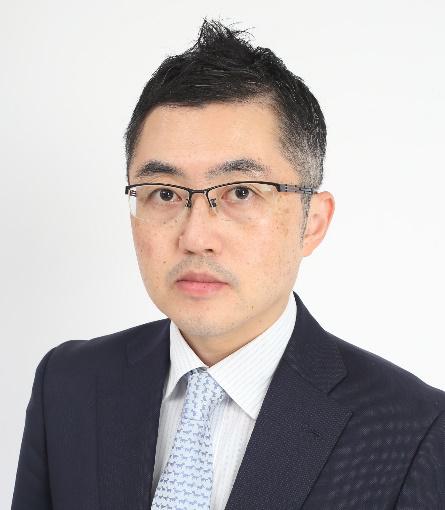 Naoya Shibata is a Director, Professor in the Institute of Engineering Innovation, The University of Tokyo. He received a PhD in Materials Science in 2003 at University of Tokyo. He was a JSPS Research Fellow at Oak Ridge National Laboratory (2003-2004) in USA. Then, He joined the Institute of Engineering Innovation at the University of Tokyo from 2004 and he became a Professor there from 2017. His research focuses on the development of new imaging techniques in scanning transmission electron microscopy and their application to interface studies in materials and devices. He has authored or co-authored more than 350 publications in refereed journals. His honors include MSA fellow (2025), Japan Academy Prize (2023). Inoue Prize for Science (2023), JSPS Prize (2019), Richard M. Fulrath Award (2018), The 5th Nagase Award (2015), The 60th Seto Prize (2015), The 15th Sir Martin Wood Award (2013), The 6th Kazato Prize (2013).
Petr Šittner
Institute of Physics, Czech Academy of Sciences (Czechia)
Interfaces in Shape-Memory alloys
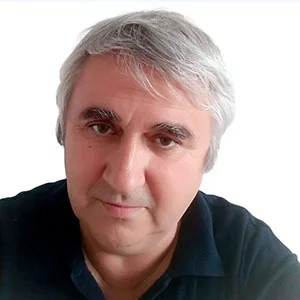 Petr Šittner is the head of the Department of Functional Materials at Institute of Physics of the Czech Academy of Sciences in Prague, Czech Republic since 2009 and the head of Division of Condensed Matter Physics since 2016. He graduated from the Faculty of Mathematics and Physics Charles University in 1995, received his Ph.D. in Condensed Matter Physics in 1991 from Czech Academy of Sciences, worked for 5 years as Research Associate at Faculty of Engineering Mie University in Japan and, since 2000 he has been working as senior scientist at the Institute of Physics of the CAS (2012-16 as vice director).